SKYCONTAINER · SPACE FOR YOUR PLANS
Container home, tiny house
or modular home?
Find the housing form that suits your plans. Ten image concepts and a practical comparison for buying, renting, guesthouses and holiday letting.
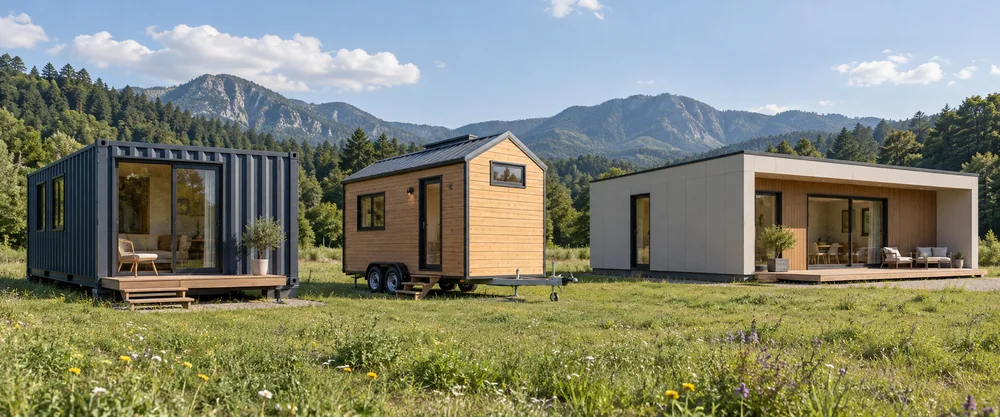
Illustrative design images, not available properties or guaranteed model specifications.
01
Container home, tiny house or modular home: start with everyday life
A small home can serve many purposes: a personal retreat, extra space for family or accommodation for guests. When comparing a container home, tiny house and modular home, begin with how you will use it. How many people need to live there? Do you require a separate sleeping area, a workspace or a kitchen for everyday cooking? These images show design possibilities rather than confirmed dimensions or available specifications.
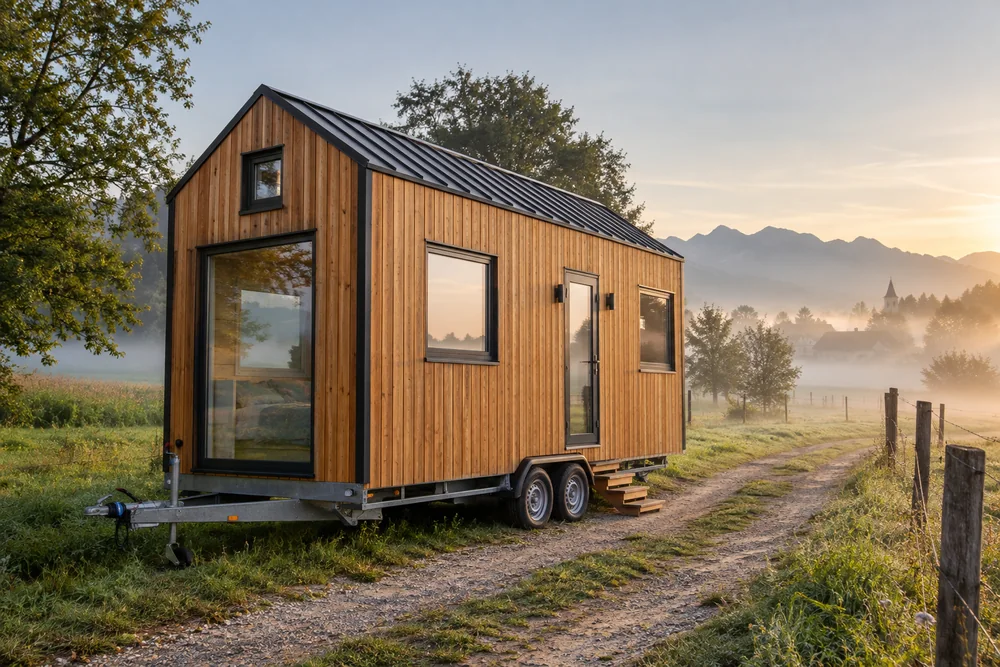
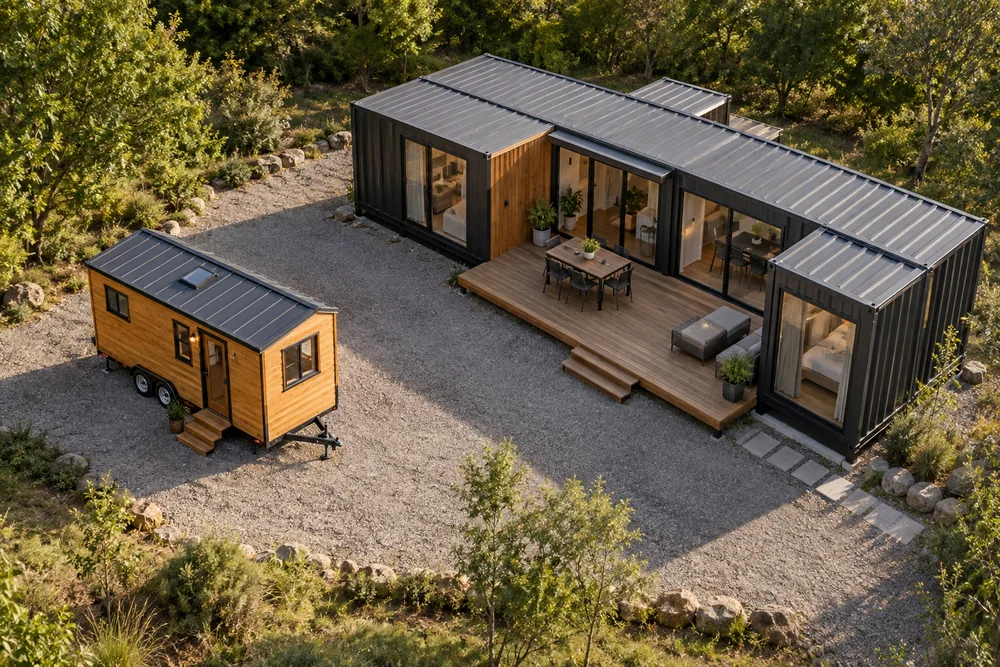
Here, a tiny house represents a compact living concept; some images show a trailer chassis. A container home may have a recognisable container form or a more complex arrangement of several units. A modular home draws attention to prefabricated room elements. These terms alone do not establish construction quality, price or permitted use. The actual specification and a floor plan that meets your needs matter more than the label.
02
Compare layouts and the feeling of space
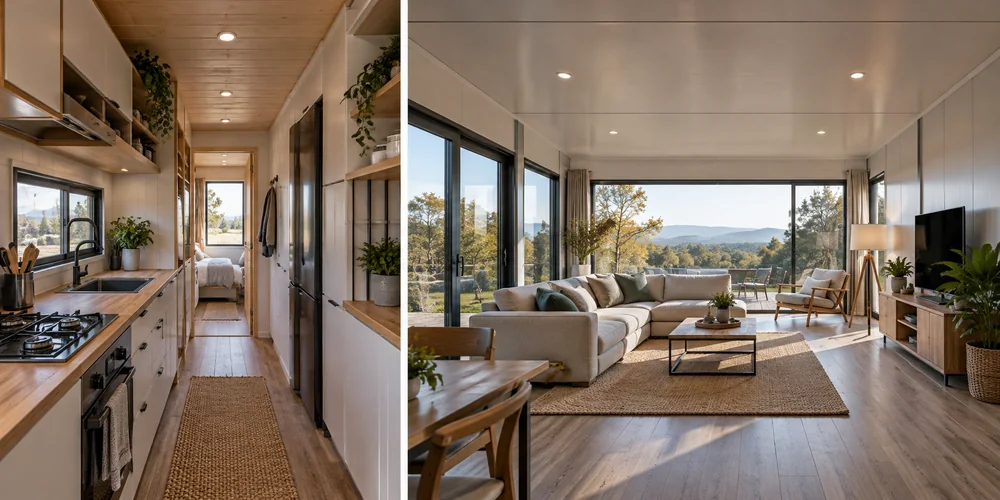
The interior comparison places a narrow living area beside an open room with broad windows. This contrast helps you clarify your expectations. Would you prefer less space to maintain, or do you need room for visitors? A well-planned compact kitchen, useful storage and clear circulation can make everyday life easier. Check the actual internal dimensions of a quotation instead of inferring width or floor area from a photograph.
Large windows visually connect a room with its surroundings, but privacy, shading and furniture placement also deserve attention. A terrace can become another favourite spot without replacing essential indoor space. Before buying a container home or renting a tiny house, imagine a normal day on the floor plan: sleeping, cooking, working, storing belongings and welcoming guests. That exercise reveals which layout really supports your routine.
03
Buying or renting: match the use and clarify the scope
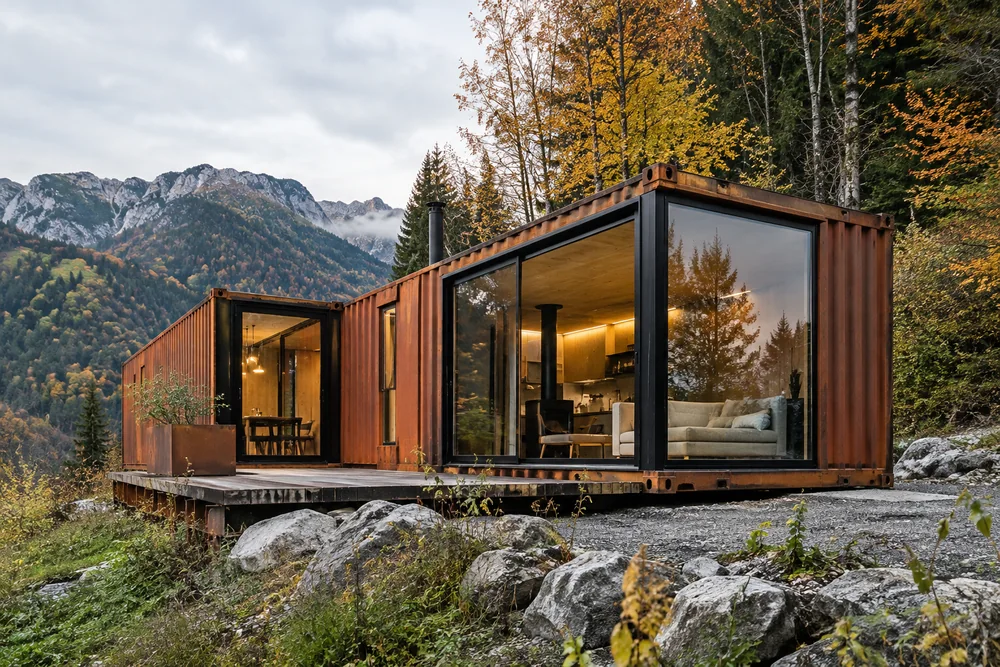
Someone looking to buy a modular home often has longer-term use in mind. Renting may be worth considering when extra space is needed for a limited period. Compare both options using the same specifications and duration. For rental offers, ask about the term, delivery, collection, insurance and return conditions. For a purchase, a clear scope of supply, understandable payment milestones and an agreed handover are important.
An affordable solution is not necessarily the listing with the smallest headline figure. A raw shipping container, a finished living space and a multi-storey container house are different starting points. Write down the services you actually need and those you will have to arrange separately. These pictures can help you communicate preferences, but they cannot replace a supplier's confirmation of availability, equipment or contractual terms.
04
The site and installation are part of the home concept
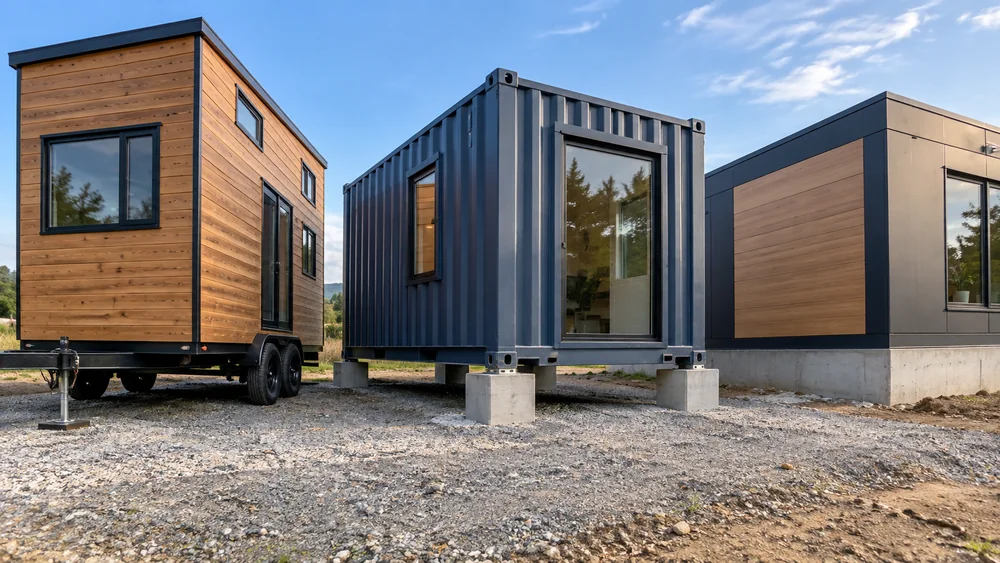
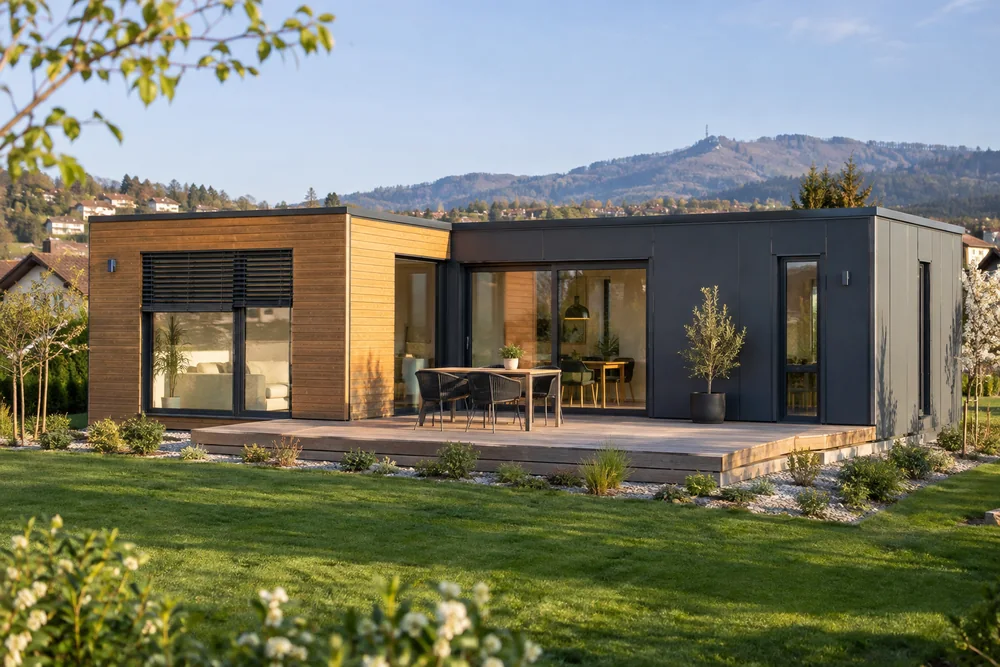
A quiet garden spot, a village-edge plot or a hillside setting can shape a housing concept. Whether a project is possible there must be established for the actual site. Discuss your intended use with the relevant authority before buying a container home or ordering a modular home. A trailer chassis in an image proves neither road approval nor permission for permanent residential use.
The installation comparison shows why the connection between a home and the ground needs planning. Appropriate foundations and fixing methods depend on the project and should be assessed by qualified professionals. Water, wastewater, electricity, access and delivery matter too. Record responsibilities and unresolved questions so that the supplier's quotation and the work needed on your plot can be coordinated without overlooking essential services.
05
Consider total costs rather than apparent bargains
Affordable living begins with a budget that includes more than the house price. A container home, tiny house or modular home project may involve land, site preparation, foundations, transport, a crane, utilities, fittings and landscaping. Which items are necessary depends on your plans. Ask for a clear explanation of what the quotation includes and which services need to be priced separately.
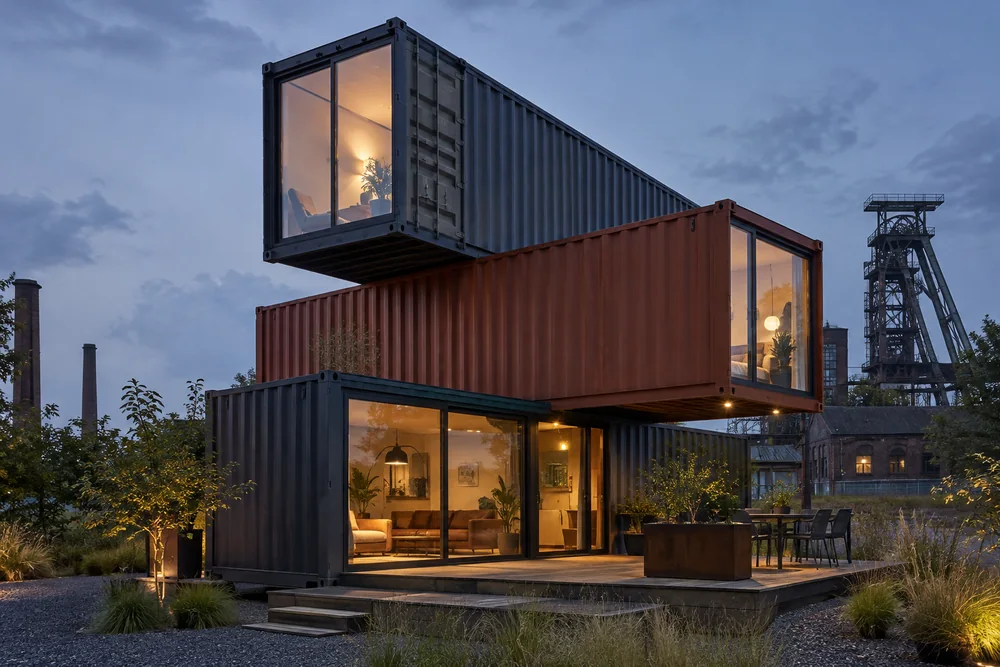
The images deliberately show different concepts. Comparing one compact unit with a staggered house made from several containers using a single price label would be misleading. Consider running costs, maintenance and a reserve for unresolved items as well. If you want to buy an affordable modular home, an appropriate size and a clear scope of supply are more useful than a blanket promise of savings. No invented prices or available properties are attached to these design concepts.
06
Prepare delivery and assembly in advance
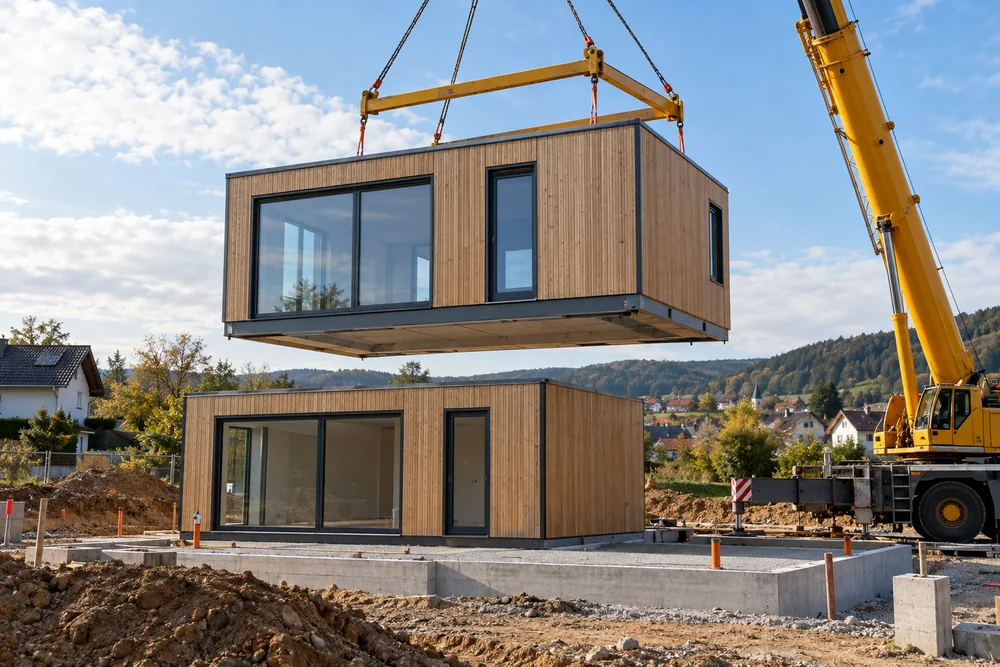
The module suspended from a crane highlights a practical question: how will the unit reach your plot? Discuss access, narrow points, road capacity and manoeuvring space with the professionals involved. Agree on a suitable crane position and the sequence of work too. An attractive plot becomes a workable site only when delivery and installation can be realistically planned.
Do not assume every service is automatically included when buying a modular home. Ask about transport, assembly, the prepared installation area and the handover of utility connections. A rental also requires planning for later collection. A written task list helps everyone understand who prepares, delivers, installs and checks the handover. The assembly image is an illustration, not a documented construction guide or a promise of a particular delivery method.
07
Letting: guesthouses, tiny houses and holiday accommodation
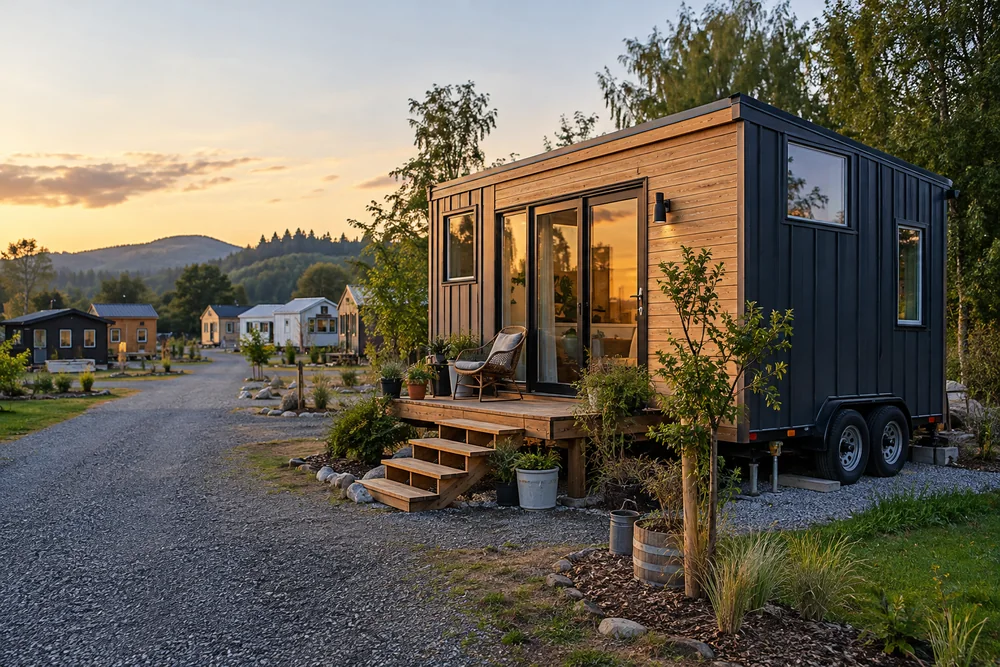
A small guesthouse can give family and visitors a retreat of their own. If you want to buy a tiny house for letting, also plan from the guest's perspective. Straightforward access, comfortable sleeping arrangements, practical storage and fittings that are easy to maintain can improve the experience. Consider a guest concept suited to the actual location instead of filling a listing with search phrases or facilities that are not provided.
Airbnb may be one channel for marketing suitable holiday accommodation. Before starting, consider permitted use, local requirements, cleaning, communication, running expenses and insurance. Later, describe only the rooms and equipment actually available. A container home for holiday guests or a compact apartment concept needs a realistic operating plan. SkyContainer is not an Airbnb partner, and these pictures represent neither bookable accommodation nor guaranteed income.
08
Compare offers using a clear wish list
Which of these three housing forms suits you best? Summarise the intended use, site, preferred layout and budget in a short enquiry. Choose details in the images that appeal to you: warm timber cladding, a quiet terrace or an open glazed front. Separate design preferences from technical requirements. A supplier can then explain more precisely which version is offered and what adaptations may be possible.
Compare complete quotations rather than labels such as buy a container home, rent a tiny house or affordable modular home. Request clear documents, actual dimensions and a detailed scope of supply. Used units also require a condition assessment. Once unanswered questions are resolved, a housing idea can become an informed decision. This image sequence supports that process with ten different scenes, without displaying the same image more than once on this page.
Take the next step with the right questions
Write down your intended use, site, layout and budget. Use these images as a starting point for discussion and ask for confirmation of specific services.
Plan total costs · Prepare for holiday letting · Container-home buying guide · Explore existing models
Further reading: Airbnb: responsible hosting.